

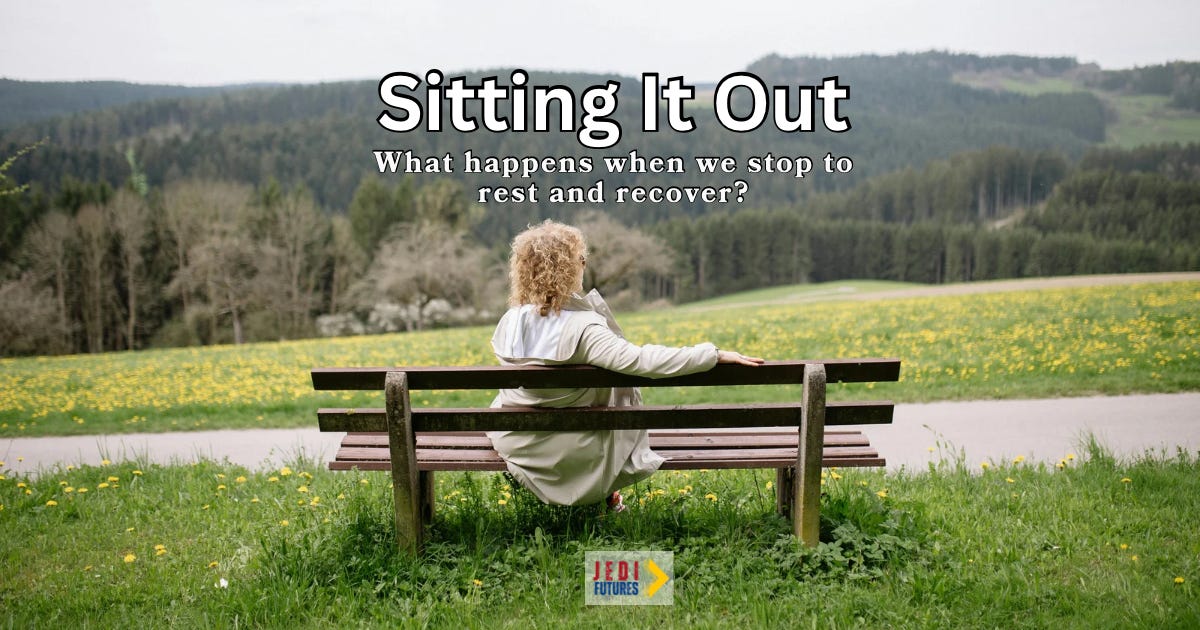
I went on vacation for a week recently and discovered something both obvious and strangely profound: the world did not end.
For some folks on my team, it was a release to let go of the tasks we usually hold together. For others, they covered what could not wait. And for me, there was a quiet kind of relief in realizing that I could step away — and still the work continued. I may be a team player, but occasionally I need to sit out for a few plays and let the team carry me.
That small experience felt bigger than a calendar break. It felt like a correction to a story so many of us carry: that everything depends on us, that our constant availability is proof of our value, that stepping back is somehow selfish or irresponsible.
We are living through a time of profound transformation, and transformation is stressful even when it is necessary.
Something old is breaking down around us. Institutions we were taught to trust feel brittle. Cultural norms are shifting. Economic pressure is relentless. Technology has dissolved the boundaries between public and private life, work and rest, signal and noise. Many of us can feel that we are standing in the middle of a great turning, but we do not know yet what is being born, what is dying, or what will be asked of us before this season passes.
That uncertainty has weight.
It lives in the body as much as the mind. It shows up in the tight chest, the restless sleep, the short temper, the inability to focus, and our impulse to check the phone one more time before setting it down. We tell ourselves we are staying informed, staying responsive, staying productive. But often we are simply staying activated. Where is the “off” button for our attentional system?
We’ve become cogs in the attention-demand economy where the news never ends, our to-do list repopulates overnight. We might mistakenly believe the text messages, emails, and alerts mean we are needed everywhere, all the time. Somehow, our availability becomes a kind of moral expectation. If we do not answer quickly enough, produce quickly enough, adapt quickly enough, it can feel as if we are failing some invisible test.
We human beings were not made to live at the pace of machines, always “on.”
We were made for rhythm within seasons of effort and seasons of recovery. We were made to live inside conversations that have enough silence in it to let truth appear. Our work will be held in human-sized hands. Yet many of us are trying to navigate social upheaval while overfed—and disregulated—on information. We are undernourished and unable to be fully present in the moment. We are carrying global grief in one hand and grocery lists in the other, trying to remember a password while democracy trembles, and injustice flashes across a screen between a recipe and a weather report.
Our world is a lot right now. No wonder people feel exhausted.
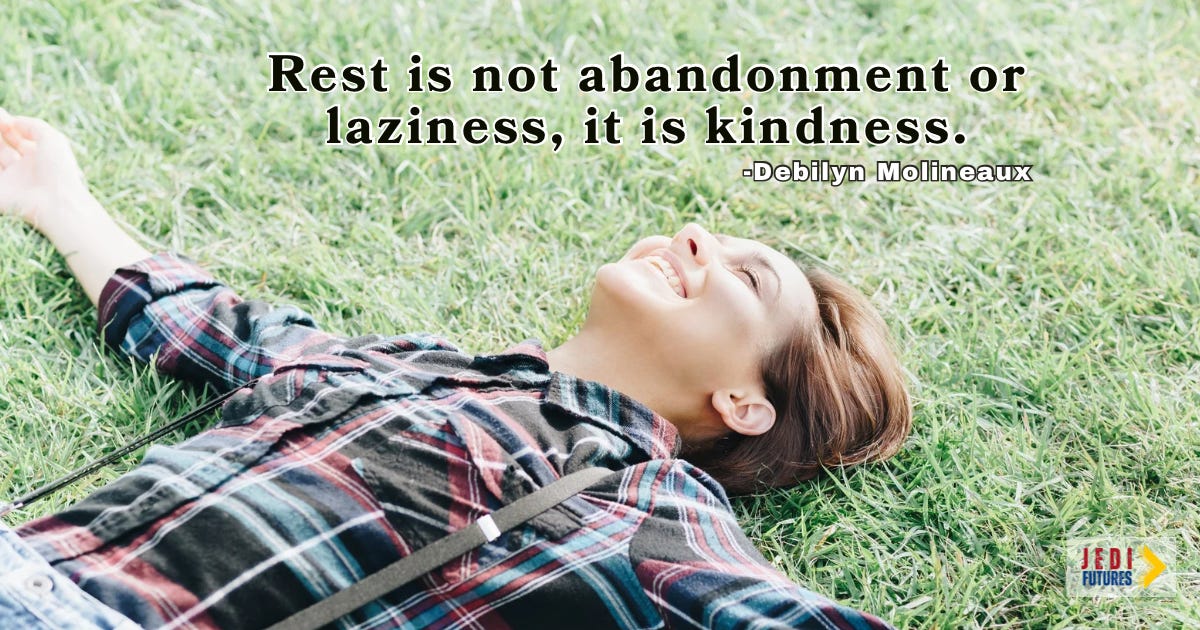
One mantra we should tell ourselves over and over: Rest is not abandonment or laziness, it is kindness. Trusting others is not a weakness, we are strongest when we work together. Our healthy communities will continue the work we can pause to breathe. Slowing down in a time like this may be one of the most responsible things we can do. We are, after all, human beings. Not human doings.
When everything around us is accelerating, our capacity for self-regulation becomes a civic skill as much as a personal one. If we cannot notice when we are flooded and reactionary, we become easier to manipulate. Easier to provoke and easier to divide. A dysregulated public is more reactive, more suggestible, more vulnerable to outrage and despair. The speed of the culture does not just wear us out. It makes us less wise. In other words, we act from our base instincts instead of highest ideals.
That is why doing one thing at a time matters. Answer the email. Wash the dish. Sit with the hard feeling before opening another tab. Take the walk without turning it into one more opportunity to consume. Breathe before responding. Let one task be enough for this moment. Let your body register that you are here, and that here is survivable.
Mindfulness is not a luxury for people with extra time. It is a way of protecting our human dignity during times that would gladly strip it away. It is how we return to ourselves when the world keeps pulling us outward in fragments.
We cannot control the pace of history. We cannot calm every headline or finish every task. But we can refuse to let speed become our master. And perhaps that refusal is part of the transformation too — not just changing the world around us, but changing the way we inhabit it.
So I’ll leave you with this: When did you last sit it out? And what did you discover when you did?