
Unacceptable Behavior: Finding Your Safety in a Dysfunctional World
When anger, blame, or shame come your way—here’s how to protect your peace without passing on the pain.

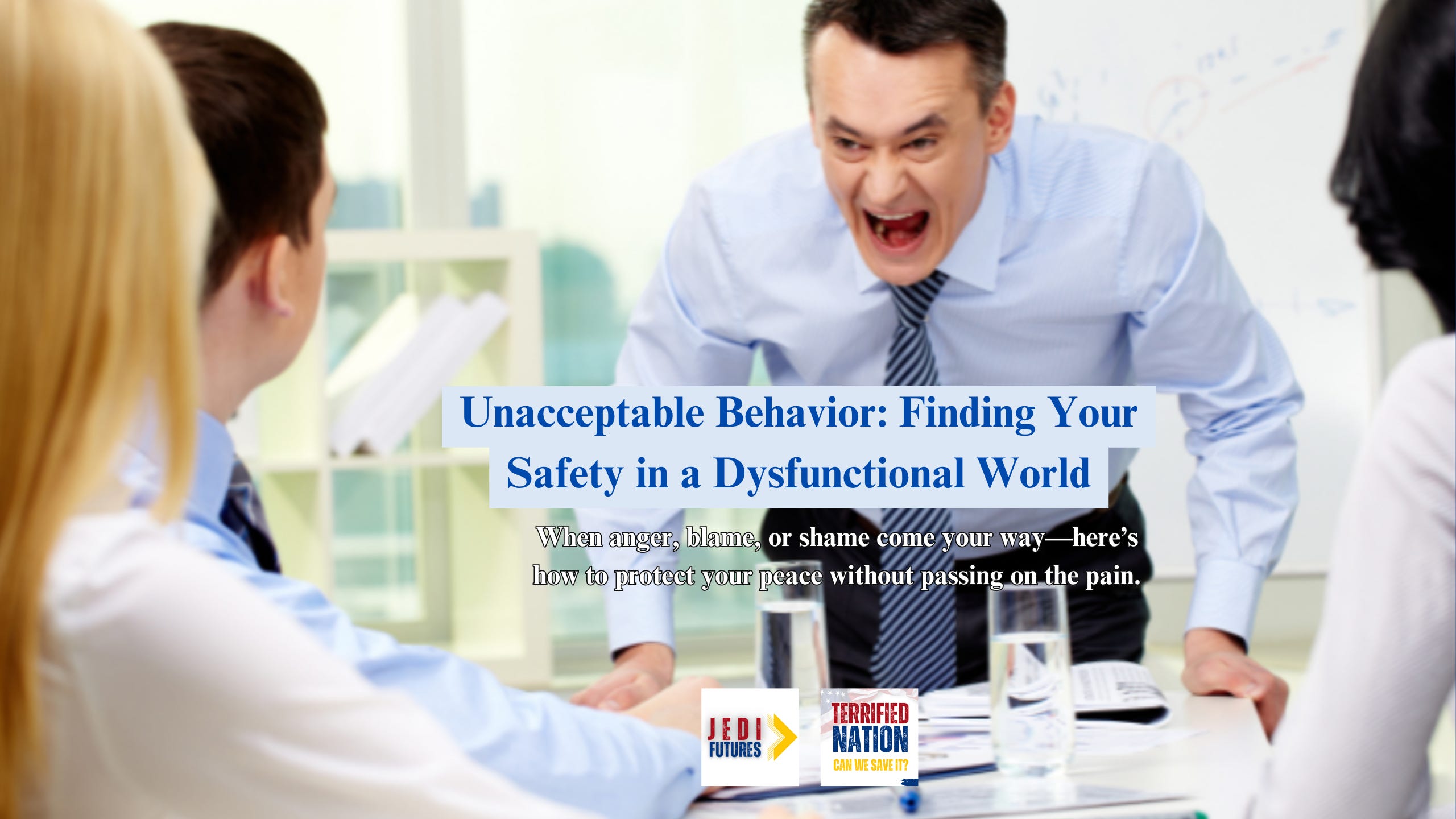
We are all members of a dysfunctional family today. Not just in our homes, but in our society at large. The pressures of modern life—rising costs, fractured communities, political unrest—have eroded our basic sense of safety. We are navigating a world shaped by trauma: financial, emotional, and physical.
This chronic insecurity—this “not enough to survive” mentality—has become the fuel of our economy. Fear of scarcity or of losing what we've earned drives so many of our decisions. We strive to feel safe, often in ways that distort our relationships and our sense of self.
In healthy families, children grow up with a foundation of safety. This security allows them to explore, make mistakes, and develop confidence in their choices. But in a dysfunctional family—or society—that safety is missing. Instead of curiosity and connection, we learn to hide, defend, and cope.
So how do we find our way back to being a functioning family—personally, professionally, and collectively?
Step One: Notice Where You Feel Safe
Start with an inventory. Ask yourself: Where do I feel safe?
I feel safe at home. When I meditate. In my car. With close friends. When I cook. It took practice to recognize these safe spaces—and more importantly, to value them.
Step Two: Name Your Coping Strategies
When I didn’t feel safe, I wore perfection like armor. If I could be perfect, maybe no one would judge me. Later, I turned to control. If I controlled every detail of my life, maybe I could prevent pain. These strategies helped me survive, but they also hurt the people around me. Eventually, I found healing in spaces where I could be flawed and still accepted—through personal growth workshops and later, more authentic relationships. As I deepened my self-awareness, I met the scared 5-year-old inside me who was running much of my adult life. Seeing her helped me understand my triggers—and release the shame tied to them.
Step Three: Identify What Triggers You
For me, it’s being on the receiving end of unfiltered anger—sharp, blaming, uninvited.
No conversation. No curiosity. Just a verbal attack.
It cuts deep and activates old wounds. If you grew up in dysfunction, you might feel this too.
That hypersensitivity is not a weakness—it’s a signal. It’s your body saying, “This doesn’t feel right.”
Today, I notice it in the workplace, in friendships, even in spiritual circles. The sense of emotional danger is my cue to pause, observe, and ask questions. It’s not always comfortable, but it’s necessary.
So, What Can We Do?
If you’re on the receiving end of unacceptable behavior—anger, blame, shaming—here’s what I’ve learned to do:
Pause and Breathe
Give yourself a moment to re-center. Don’t respond right away. Your nervous system needs a chance to reset.Name It—At Least to Yourself
Say it plainly in your own head: This is not okay.
Naming it helps you regain a sense of control and clarity.Set Boundaries
If possible, calmly say something like:
“I want to understand you, but I can’t do that while I’m being yelled at.”
Or, “Let’s take a break and talk when we’re both calmer.”Exit the Situation if Needed
You don’t have to stay in the line of fire. Walking away is not weakness—it’s self-respect.Seek Support
Talk to someone who will hear you without judgment. Sometimes, just being witnessed in your pain is healing.Do Your Own Healing Work
Patterns repeat until we recognize and interrupt them. Therapy, journaling, spiritual practices, and trauma-informed workshops can help you rewrite old scripts.Refuse to Mirror the Behavior
Don’t pass on the hurt you’ve received. Choose differently. That’s how the healing spreads.
We can’t control how others behave, but we can decide how we respond—and how we protect our peace.
It starts with courage. And compassion.
For ourselves. And eventually, for them, too.