

When I was little, I wanted to be a princess. I imagined wearing a sparkling crown, living in a castle, and—most of all—being saved. I believed a handsome prince would come, take my hand, and protect me from all the hard things in life. That’s what the stories told me.
I waited for my prince. My first love in high school spoiled me with gifts and trips. But I was young and unsure, always finding little things to criticize. When I broke up with him, he moved across the country. (I’m happy to say he found love again, stayed married, and now has grandkids!)
For me, things weren’t so simple. I met my first husband, thinking he’d take care of me. But instead of working and protecting me, he loved drawing pictures and smoking marijuana more than building a life together. So, I left.
Then came another man—a co-worker who was sweet and kind. That lasted only a few weeks before he showed up drunk at work and lost his job. Then he moved in with me, bringing his three kids. I was 20 years old, but I felt like I was 40. My heart ached for those kids, especially his daughter, whom I wanted to adopt. But I knew I couldn’t save them.
That’s when I realized something big: maybe Prince Charming wasn’t real. Maybe no one was coming to rescue me.
So, I decided to rescue myself.
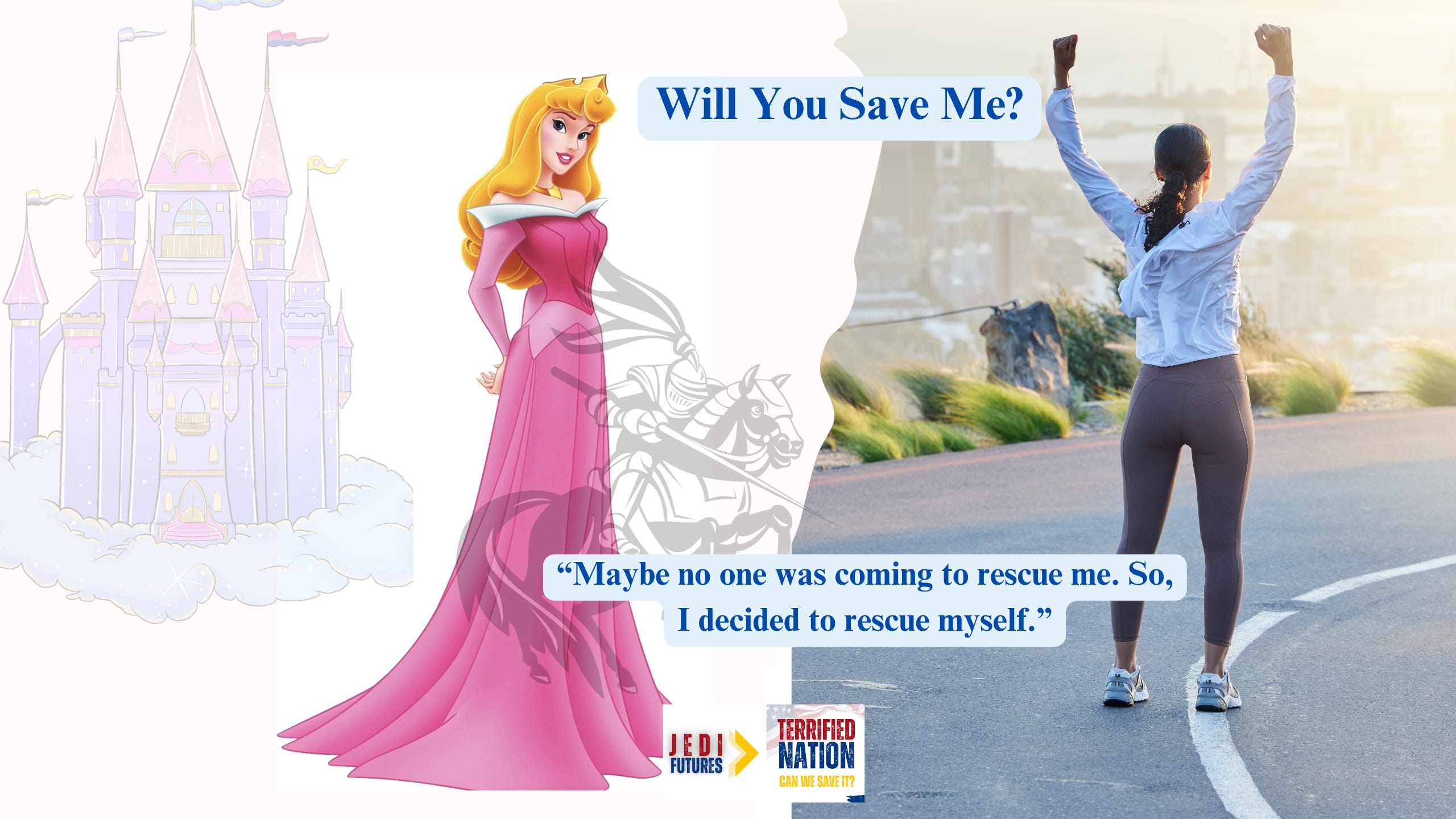
Marriage became less about fairy tales and more about teamwork. When I married again at 23, my life was much more stable. That marriage lasted over 20 years, but in the end, we grew in different directions. My path led me to civic work—helping people become the kind of citizens our country needs.
One day, I walked into a Barnes & Noble, searching for a book that would make me feel safe, happy, or wise. And then it hit me—I didn’t need another book. I didn’t need saving. I was already free. Already safe. Already whole.
Of course, that feeling didn’t last forever. Growth is like that. You have a big realization, but old habits pull you back. You bounce between the past and the future until, one day, the new way of thinking sticks. And you feel like a brand-new person.
This doesn’t just happen to individuals—it happens to groups, too.
Think of a small town with well-worn roads and routines. Everyone knows how things work. Then one day, a stranger arrives. They ask questions. “Why do you do things this way?” The town faces a choice: do they listen and grow, or do they push the stranger away? Either way, things will never go back to exactly how they were before. Change has entered.
And that brings me back to wanting to be saved.
In the United States, many people wish we could “go back” to the way things used to be. Others believe a strong leader will save us, like a knight in shining armor. But what if this discomfort—the confusion, the division, the uncertainty—is actually growth?
The real question isn’t, Who will save us?
It’s, What are we becoming?
To help answer the question what are we becoming- this resource provides a context for how we arrived at this crucial crossroads and inspires engagement in solutions. “Who Do We Choose to be?” By Meg Wheatley